

Homemade Green Pepper Jelly: A Family Canning Recipe
This homemade green pepper jelly recipe combines fresh green bell peppers, a touch of jalapeño, apple juice, cider vinegar, and sugar to make a beautifully sweet and gently spicy jelly.
Serve it over cream cheese with crackers, brush it onto chicken or pork as a glaze, use it in a marinade, or spread it on warm toast. It is one of those old-fashioned pantry recipes that can turn an ordinary snack into something special.
For me, however, this pepper jelly is about much more than what is inside the jar. It is about family, remembrance, and preserving a small taste of home.
A Family Recipe Made in Memory of Aunt Ellen
As most of y’all know, my family is very important to me.
When the eldest member of our family, my Aunt Ellen, passed away, I felt a strong need to make one of our family recipes. I was living about a thousand miles away and could not be with everyone as I would have liked. Unfortunately, I was also unable to attend Aunt Ellen’s funeral.
Digging through our family recipes and making something familiar helped me feel a little closer to everyone back home.
I chose this green pepper jelly because it was something I could make and preserve in jars. Aunt Ellen always put up her own vegetables, as did many members of our family.
Canning was how our families made the summer garden last through the cold winter months. Our pantries and basements were lined with Mason jars filled with vegetables, sauces, jams, jellies, and all kinds of wonderful things we had grown and preserved ourselves.
Opening one of those jars in the middle of winter was almost like opening a little piece of summer.
Making this pepper jelly brought those memories rushing back. It reminded me that recipes can connect us to the people we love, even when time and distance keep us apart.
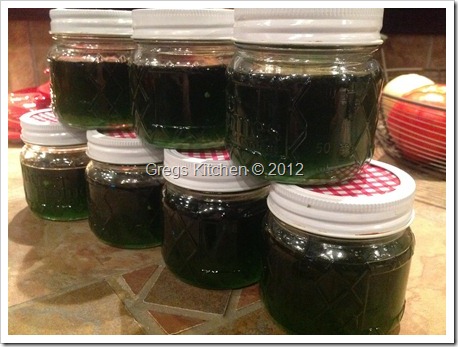
Every time I see these bright green jars lined up on the counter, I think of Aunt Ellen, my family, and those well-stocked pantry shelves from years gone by.
What Does Green Pepper Jelly Taste Like?
Green pepper jelly has a sweet, tangy flavor with the fresh taste of bell peppers and a gentle kick from jalapeño.
This version is not meant to set your tongue on fire. The single jalapeño gives it just enough warmth to keep the sweetness interesting.
The apple juice adds a light fruitiness without overpowering the peppers, while the cider vinegar gives the jelly the acidity and tang that make pepper jelly so good with rich foods such as cream cheese.
Why You’ll Love This Pepper Jelly
This homemade pepper jelly is:
- Sweet, tangy, and mildly spicy
- A wonderful way to preserve fresh green peppers
- Delicious over cream cheese
- Useful as a glaze or marinade
- A thoughtful homemade gift
- Beautiful served during Christmas or holiday gatherings
- A recipe filled with family tradition
Important Home-Canning Safety Note
Home canning should always be done using a currently tested recipe and up-to-date processing instructions from a reliable source.
Before making this recipe for shelf-stable storage, review the latest recommendations from the National Center for Home Food Preservation, your local Cooperative Extension office, and the manufacturer of the pectin you are using.
Do not change the amounts of peppers, vinegar, juice, sugar, or pectin in a canning recipe unless the change is specifically permitted by a tested source. Processing time may also need to be adjusted for your elevation.
When in doubt, refrigerate or freeze the finished jelly rather than storing it at room temperature.
Ingredients
- 7 sweet green bell peppers
- 1 jalapeño pepper
- 1½ cups cider vinegar, divided
- 1½ cups apple juice, plus more if needed
- 1 package powdered fruit pectin
- ½ teaspoon salt
- 5 cups granulated sugar
- A few drops of green food coloring, optional
Equipment You May Need
- Food processor or blender
- Large nonreactive bowl
- Jelly bag or several layers of cheesecloth
- Fine-mesh strainer
- Large, deep saucepot
- Canning funnel
- Jar lifter
- Clean half-pint canning jars
- New canning lids and screw bands
- Boiling-water canner
How to Make Green Pepper Juice
The first part of this recipe creates the strained pepper juice that will become the base of the jelly.
1. Prepare the Peppers
Wash the green bell peppers and jalapeño thoroughly.
Remove the stems and seeds, then cut the peppers into approximately ½-inch pieces.
Wear food-safe gloves while handling the jalapeño and avoid touching your face or eyes. Wash your hands and equipment thoroughly afterward.
2. Purée the First Half
Place half of the chopped peppers in a food processor or blender.
Add ¾ cup of the cider vinegar and process until the peppers are finely puréed.
Transfer the mixture to a large bowl.
3. Purée the Remaining Peppers
Add the remaining peppers and the remaining ¾ cup cider vinegar to the food processor.
Purée until finely processed, then add this mixture to the bowl with the first batch.
4. Add the Apple Juice
Pour 1½ cups of apple juice into the pepper mixture and stir well.
Cover the bowl and refrigerate it overnight. This resting time allows the flavor and color of the peppers to infuse the liquid.
5. Strain the Pepper Mixture
The following day, dampen a jelly bag or several layers of cheesecloth.
Pour the pepper mixture into the bag and allow the liquid to strain into a clean bowl. You can also place the cheesecloth inside a fine-mesh strainer for additional support.
For the clearest jelly, allow the liquid to drip without squeezing or pressing the bag. Pressing the solids may push pulp through the cloth and make the finished jelly cloudy.
Measure the strained liquid.
You will need 4 cups of pepper juice. Add enough additional apple juice to reach 4 cups if the strained mixture comes up short.
How to Make Green Pepper Jelly
1. Prepare the Canner and Jars
Prepare the boiling-water canner, jars, lids, and screw bands according to current safe-canning recommendations and the lid manufacturer’s instructions.
Keep the jars hot until you are ready to fill them.
2. Combine the Juice and Pectin
Pour the 4 cups of strained pepper juice into a large, deep saucepot.
Add the powdered pectin and salt. Stir until combined.
Use a pot with plenty of extra room because jelly can foam and rise considerably as it boils.
3. Bring the Mixture to a Boil
Place the pot over high heat.
Bring the mixture to a full rolling boil, stirring constantly. A full rolling boil is one that continues boiling even while you stir it.
4. Add the Sugar
Add all 5 cups of sugar at once, stirring until it dissolves.
Return the mixture to a full rolling boil.
Boil hard for 1 minute, stirring constantly to prevent scorching.
5. Finish the Jelly
Remove the pot from the heat.
Skim away any foam from the surface if necessary.
Add a few drops of green food coloring if you would like a brighter green jelly. This is completely optional and does not affect the flavor.
Fill and Process the Jars
Carefully ladle the hot jelly into hot jars, leaving ¼ inch of headspace.
Remove any air bubbles if needed, wipe the jar rims with a clean damp cloth, and apply the lids and screw bands according to the manufacturer’s directions.
Process the jars in a boiling-water canner using the current tested processing time appropriate for the jar size and your elevation.
After processing, turn off the heat, remove the canner lid, and follow current guidance for resting and removing the jars.
Place the jars upright on a towel or cooling rack where they will not be disturbed. Allow them to cool completely.
Check each jar for a proper seal before labeling and storing it. Refrigerate any jar that does not seal correctly.
Allow the Jelly Time to Set
Pepper jelly may take several hours or even a full day to develop its final consistency.
Try not to shake or tilt the jars while they cool. Let the pectin work its little bit of kitchen wizardry undisturbed.
Ways to Serve Green Pepper Jelly
There are plenty of delicious ways to use homemade pepper jelly.
Pepper Jelly and Cream Cheese
Place a block of softened cream cheese on a serving plate and spoon green pepper jelly over the top.
Serve it with buttery crackers for one of the easiest appetizers you will ever make. It is especially pretty at Christmas, when the green jelly can be paired with red pepper jelly or festive garnishes.
As a Meat Glaze
Brush the jelly onto:
- Grilled chicken
- Pork chops
- Pork tenderloin
- Ham
- Smoked ribs
- Meatballs
- Chicken wings
Because the sugar can burn, apply the jelly near the end of cooking.
In a Marinade or Sauce
Whisk pepper jelly together with ingredients such as mustard, soy sauce, garlic, vinegar, or a little oil to make a sweet-and-tangy marinade or dipping sauce.
On Toast or Biscuits
Spread it on warm toast, biscuits, English muffins, or cornbread. It is especially good alongside a cup of morning coffee.
On a Charcuterie Board
Pair green pepper jelly with:
- Cream cheese
- Goat cheese
- Sharp cheddar
- Smoked cheeses
- Crackers
- Crostini
- Sliced apples or pears
- Smoked sausage
- Country ham
Can I Make the Jelly Hotter?
The amount and type of pepper in a shelf-stable canning recipe should not be changed unless a tested recipe specifically permits that substitution.
For additional heat when serving, spoon the finished jelly over cream cheese and sprinkle finely diced fresh jalapeño on top, or serve it alongside a hotter pepper sauce.
That gives you more kick without changing the tested proportions of the canned recipe.
Can I Reduce the Sugar?
Do not reduce the sugar in a traditional pectin recipe unless you are using a pectin specifically designed for low-sugar or no-sugar recipes and following that product’s tested instructions.
Sugar helps the jelly set and also affects the finished product’s quality and preservation.
Why Didn’t My Pepper Jelly Set?
Pepper jelly may remain soft for several reasons:
- The liquid or sugar was measured incorrectly
- The mixture did not reach a full rolling boil
- It was not boiled for the required amount of time
- The pectin was old or expired
- The recipe was doubled
- Ingredient substitutions were made
- The jelly has not had enough time to cool and set
Avoid doubling jelly recipes. Larger batches may not heat and evaporate properly, which can prevent the pectin from forming a good gel.
Even when pepper jelly remains slightly soft, it can still be delicious as a glaze, sauce, or marinade, provided it was prepared and processed safely.
How to Store Green Pepper Jelly
Store properly sealed jars in a cool, dark, dry place.
Label each jar with the recipe name and the date it was made. Refrigerate the jelly after opening.
Discard any jar that shows signs of spoilage, leakage, mold, bulging, unusual bubbling, or an off odor. Never taste questionable home-canned food to determine whether it is safe.
A Little Taste of Home in Every Jar
Making this green pepper jelly gave me a way to feel closer to my family during a difficult time.
I could not be there to say goodbye to Aunt Ellen, but I could stand in my kitchen, pull out the canning jars, and continue a tradition that she and so many members of my family understood well.
That is one of the special things about family recipes. They do not simply tell us what to put in a bowl or how long something should cook. They remind us where we came from, who taught us, and whose hands prepared the same foods before ours.
A Mason jar filled with green pepper jelly may look like a simple pantry staple, but to me, it holds memories of Aunt Ellen, gardens filled with summer vegetables, and basements lined with rows of home-canned food.
I hope y’all enjoy this jelly as much as my family has. Serve it over cream cheese, brush it onto something sizzling from the grill, or spread it on toast with your morning coffee.
And when you open the jar, take a moment to remember the people whose recipes, gardens, and traditions helped fill your own kitchen.




Sorry for your loss, Greg. This is a cherished recipe, for sure.