
The Best Flowers for Making Jelly in East Tennessee
A Homestead Guide to Beautiful, Old-Fashioned Flower Jellies
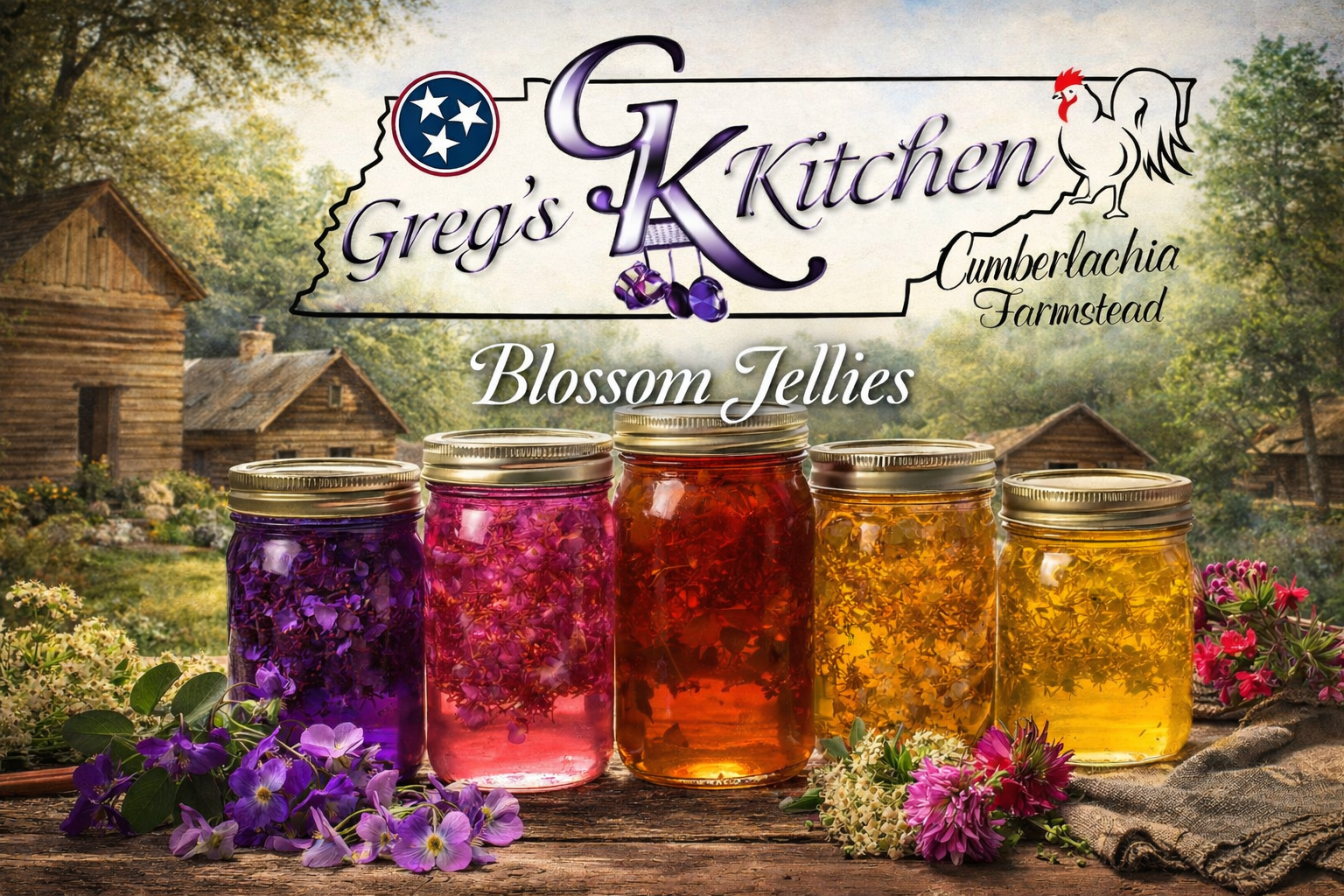
There’s something extra special about turning flowers from your yard, garden, or homestead into homemade jelly. It feels a little like old-fashioned country kitchen magic — a handful of blossoms, a pot of steeped tea, a little sugar and pectin, and suddenly you have jars of beautiful jelly ready for biscuits, toast, or gift baskets.
Here in East Tennessee, we’re blessed with a wonderful variety of flowers that can be used for jelly making. Some are wild and easy to forage, some grow right in the yard, and others can be planted especially for cooking and preserving. Flower jellies are not only beautiful, but they’re also a fun way to preserve the flavors of spring and summer.
In this post, I’m sharing some of the best flowers for making jelly in East Tennessee, what they taste like, when to gather them, and the basic method for turning those blossoms into homemade jelly.
Why Make Flower Jelly?
Flower jelly is made by steeping edible blossoms in hot water to create a strongly flavored floral tea. That tea is then combined with lemon juice, sugar, and pectin to make jelly.
The result is often:
-
Light and delicate in flavor
-
Beautiful in color
-
A lovely way to use seasonal blooms
-
Perfect for biscuits, toast, thumbprint cookies, charcuterie boards, and homemade gifts
Some flower jellies are mild and sweet, while others are more fragrant or herbal. Either way, they bring a taste of the garden right into the kitchen.
Important Safety Tips Before You Start
Before gathering flowers for jelly, keep these safety rules in mind:
1. Only use flowers that are positively identified
Never use a flower unless you are absolutely sure what it is.
2. Only use flowers known to be edible
Not every flower is safe to eat, even if it’s pretty.
3. Avoid sprayed flowers
Do not use flowers from florists, garden centers, roadsides, or anywhere that may have been treated with pesticides, herbicides, or chemicals.
4. Harvest from clean areas
Choose blooms from your own homestead, garden, or trusted unsprayed areas.
5. Remove bitter green parts when needed
Many flower jelly recipes use only petals or blossoms, since stems and green parts can sometimes add bitterness.
When in doubt, skip it. Pretty flowers are wonderful, but we want jelly — not a trip to regret city.
Best Flowers for Jelly in East Tennessee
1. Wild Violets
Wild violets are one of the best and easiest flower jellies for East Tennessee. They grow freely in many lawns, shady spots, and woodland edges in spring.
Why they’re a great choice:
-
Common in East Tennessee
-
Easy to harvest
-
Mild, delicate floral flavor
-
Makes a beautiful jewel-toned jelly
Violet jelly is famous for its magical color change. The steeped tea often starts blue or purple, and when lemon juice is added, it can turn a vivid pinkish-purple. It’s one of the prettiest jellies you can make.
Best season:
Early spring
2. Redbud Blossoms
Redbud trees are one of the true signs of spring in East Tennessee. Those bright pink-purple blossoms are not only beautiful on the tree, but also edible.
Why they’re a great choice:
-
Very Appalachian and seasonal
-
Mild floral flavor with a slight tang
-
Easy to gather in spring
-
Makes a lovely regional jelly
If you want a jelly that feels especially tied to our area, redbud is one of the best choices.
Best season:
Early to mid-spring
3. Elderflowers
Elderflowers make one of the most elegant flower jellies you can put up. The flavor is fragrant, delicate, and classic.
Why they’re a great choice:
-
Wonderful aroma
-
Excellent for refined, old-fashioned preserves
-
Common enough in the region if you know where to look
-
Makes a beautiful specialty jelly
Elderflower jelly feels a little fancy while still being deeply rooted in traditional country preserving.
Best season:
Early summer
4. Clover Blossoms
Clover jelly is a wonderful beginner flower jelly because clover is often abundant and easy to gather from untreated areas.
Why they’re a great choice:
-
Easy to find
-
Mild and sweet flavor
-
Great for larger harvests
-
Good choice for first-timers
Red clover, white clover, and crimson clover can all be used as long as they come from unsprayed ground.
Best season:
Late spring through early summer
5. Rose Petals
If you have fragrant old-fashioned roses growing on your homestead, rose petal jelly is a beautiful option.
Why they’re a great choice:
-
Traditional and elegant
-
Lovely floral aroma
-
Great for gift giving
-
Pairs well with tea-time foods and desserts
Use only highly fragrant, unsprayed roses for the best flavor. Some roses smell amazing in the garden but don’t always translate strongly in jelly, so the most fragrant blooms usually work best.
Best season:
Late spring into summer
6. Bee Balm
Bee balm, also known as Monarda, is a great choice if you enjoy a stronger floral flavor with a hint of herbal spice.
Why they’re a great choice:
-
Unique flavor
-
Beautiful blooms
-
Great for gardeners and pollinator patches
-
Can make a jelly with a more complex taste
Bee balm jelly is especially fun for those who want something a little different from the softer floral jellies.
Best season:
Summer
7. Dandelions
Dandelions are one of the most familiar edible flowers around, and they make a surprisingly pleasant jelly when gathered young and fresh.
Why they’re a great choice:
-
Extremely easy to find
-
Budget-friendly and homestead-friendly
-
Often described as having a mild honey-like flavor
-
Great use for a common yard flower
Make sure they come from a clean, chemical-free area.
Best season:
Spring
8. Calendula
Calendula is one of the best flowers to intentionally grow for jelly making. It’s cheerful, productive, and useful in the kitchen.
Why they’re a great choice:
-
Easy to grow in the garden
-
Mild floral flavor
-
Beautiful color
-
Great for gardeners who want a dependable flower crop
Calendula is an excellent choice if you want to plant specifically for edible flowers and preserves.
Best season:
Summer through frost, depending on planting time
9. Fruit Tree Blossoms
If you have apple, pear, peach, or cherry trees on your homestead, you may be able to make blossom jelly from those blooms.
Why they’re a great choice:
-
A wonderful use of homestead orchard blooms
-
Light floral flavor
-
Unique and seasonal
-
Especially special for small batches
Only harvest lightly so you don’t reduce your fruit set too much. A little blossom jelly is lovely, but we still want those apples and peaches later on.
Best season:
Spring
Flowers I Would Avoid
Even though many flowers bloom beautifully in East Tennessee, not all are safe to eat. Avoid experimenting with unknown ornamental flowers or anything not clearly identified as edible.
Some common landscape flowers and plants can be toxic, so always research carefully before using any blossom in the kitchen.
A good rule is this:
If you’re not 100% sure, don’t put it in the jelly pot.
Basic Method for Making Flower Jelly
Most flower jellies follow the same general process. The flower may change, but the method stays pretty similar.
Step 1: Harvest the flowers
Gather fresh blossoms on a dry day from clean, unsprayed areas. Shake out insects and remove stems or green parts if needed.
Step 2: Make a strong flower tea
Place the blossoms in a heat-safe bowl or jar and pour boiling water over them. Let the flowers steep until the liquid becomes richly colored and flavorful.
In many recipes, this is done with around:
-
2 to 4 cups of blossoms
-
4 cups boiling water
After steeping, strain well.
Step 3: Add lemon juice
Lemon juice brightens the flavor and helps with acidity. In some flower jellies, it also changes the color in a beautiful way.
Step 4: Add pectin and sugar
Follow the directions for your chosen pectin carefully. Different pectins require different amounts of sugar and different cooking instructions.
Step 5: Bring to a full boil
Cook according to the recipe directions until the jelly reaches the proper stage.
Step 6: Ladle into jars
At this point, the jelly can usually be made as:
-
Refrigerator jelly
-
Freezer jelly
-
Water bath canned jelly, using a tested canning recipe
Always use safe canning practices when preserving for shelf storage.
Best Flower Jellies to Start With
If you’re new to flower jellies, these are the easiest and most rewarding choices for East Tennessee:
Violet Jelly
For the prettiest color and easiest spring harvest
Clover Jelly
For a mild, sweet, beginner-friendly jelly
Redbud Jelly
For a distinctly Appalachian springtime preserve
Elderflower Jelly
For an elegant and fragrant specialty jelly
If I were putting together a first homestead jelly lineup, those four would absolutely make the cut.
East Tennessee Flower Jelly Harvest Calendar
Early Spring
-
Wild violets
-
Redbud blossoms
-
Fruit tree blossoms
Late Spring
-
Clover
-
Roses
-
Dandelions
Early Summer
-
Elderflowers
-
Bee balm
Summer
-
Calendula
-
Roses
-
Bee balm
Keeping a simple bloom calendar for your homestead can help you gather blossoms at just the right time.
Tips for the Best Flower Jelly
Harvest in the morning
Flowers are often freshest and most fragrant earlier in the day.
Use blooms at their peak
Avoid wilted, old, or rain-damaged blossoms.
Don’t overpack the flowers
You want a flavorful infusion, but you also want good liquid yield after straining.
Label your jars clearly
Flower jellies can look similar once canned, especially if you make several kinds.
Start with small batches
This helps you test flavor and color before making a lot.
Save a jar for gifts
Flower jellies make beautiful homemade gifts for spring, Mother’s Day, tea baskets, and holidays.
Final Thoughts
Making flower jelly is one of the sweetest ways to bring the beauty of the garden into the kitchen. Here in East Tennessee, we have so many wonderful options — from violets and redbuds in spring to elderflowers and bee balm in summer.
It’s a beautiful homestead tradition, a great way to use edible blooms, and a fun project for anyone who loves old-fashioned preserving. Whether you’re making a jar for your morning biscuit or putting up a few pretty jars for gifts, flower jelly is one of those recipes that feels both practical and magical at the same time.
For East Tennessee, my top recommendations are:
violet, redbud, elderflower, and clover.
Those four give you a wonderful mix of beauty, flavor, seasonality, and regional charm.
Conclusion
If you’ve never made flower jelly before, start with what’s already growing around you — especially safe, edible blooms like wild violets, clover, or redbuds. Once you make your first batch, you may find yourself looking at every patch of blossoms on the homestead and wondering what else belongs in a jar.
And honestly, that’s not a bad way to see the world ?





Be the first to comment